




The days of hiring a generic “webmaster” are effectively over. The WordPress talent market has split into two very different worlds. On one end, you have freelancers charging $20 per hour to simply install themes. On the other hand, you have specialized engineers billing $150 per hour to build complex, headless commerce architectures. Because of this massive gap, where you look for talent is just as important as who you hire.
Your platform choice dictates your entire project experience. It determines whether you will spend weeks filtering through hundreds of unqualified proposals on an open marketplace or if you get matched with a pre-vetted expert within 24 hours.
We know this process can feel overwhelming, but the right partner is out there. This article provides a complete comparison of the top providers to help you cut through the noise and make the right choice for your business goals.

Get matched with the developer
that is perfect fit for your WordPress or WooCommerce needs.
Start a project
Top WordPress freelance platforms compared
The best platform for your project depends entirely on your specific needs. If you need a broad pool of talent and have time to vet, Upwork is a strong contender. For guaranteed, pre-vetted WordPress experts at a predictable price, Codeable is the industry standard. If you need a direct hire for a long-term role, Toptal or Lemon.io offer recruitment-style matching.
Let’s explore these and some more freelance platforms in more detail.
1. Codeable

Codeable is a specialized freelance platform that connects businesses and individuals with top-tier WordPress developers. The company is built to solve the common frustrations of generalist freelance marketplaces, specifically poor quality work, lack of reliability, and the “race to the bottom” bidding wars.
Unlike open marketplaces like Upwork or Fiverr, Codeable is a closed, highly vetted network. It focuses on the WordPress ecosystem (including WooCommerce), ensuring that every freelancer on the platform is a genuine expert in the field. The platform has a pool of approximately 700–800+ vetted experts, representing the top ~2% of applicants.
How it works
Codeable uses a unique matching system designed to ensure accurate project scoping. Instead of browsing thousands of profiles or receiving dozens of low-quality bids, a client posts a project brief and is matched with a small group of pre-vetted experts. These experts collaborate in a shared workroom to ask questions and clarify the project requirements before any pricing is discussed, ensuring everyone fully understands the task at hand.
Once the scope is defined, the platform’s algorithm calculates a single fixed price based on the average of the experts’ estimates. This allows the client to choose a developer based on their communication style and expertise rather than the lowest cost. Work begins after the funds are deposited into a secure escrow account, and the money is only released to the developer once the client marks the project as complete.
Key features
Codeable’s unique selling propositions revolve around trust, quality, and removing the risks associated with hiring freelancers.
- Strict vetting process (top 2%): Codeable is known for its rigorous entry process. Developers must pass a code review, a behavioral interview, a live coding test, and a trial period. Only the top 2% of applicants make it in.
- Single-price guarantee: Clients do not receive 50 different bids. They get one fair market price, allowing them to hire based on the developer’s expertise and communication style rather than the lowest dollar amount.
- The Codeable Promise: All work comes with a 28-day bug-fix warranty. If any issues arise related to the scope of work within a month of completion, the developer fixes them for free.
- Money-back guarantee: If a project goes off track or the expert fails to deliver the agreed scope, Codeable provides a refund policy to protect the client’s investment.
- Escrow security: Payments are held safely until the work is delivered, protecting both the client (from non-delivery) and the expert (from non-payment).
- Support team: Unlike many hands-off platforms, Codeable has a support team that actively monitors projects and can step in to mediate if communication breaks down.
Best for
The platform is ideally suited for small to medium-sized businesses, e-commerce store owners, and digital agencies that view their website as a critical business asset. Because Codeable focuses on quality and long-term reliability over low costs, it is the best choice for clients who need complex customizations, secure integrations, or “rescue” work for broken sites. It is particularly valuable for non-technical founders who need a consultative partner to guide them through technical decisions rather than just a task-based coder.
The platform guarantees premium code standards and expert communication, making it the right fit for clients willing to pay market rates (typically $80–$120/hour) to avoid the risks, delays, and poor quality often found on generalist freelance marketplaces.
2. Upwork

Upwork stands out as the world’s largest work marketplace, distinguishing itself through its massive scale and “hybrid” service model that caters to every level of hiring. Rather than offering a single way to hire, Upwork provides three distinct avenues: the Talent Marketplace for traditional bidding, Project Catalog for purchasing pre-scoped fixed-price services (similar to e-commerce), and Upwork Enterprise for large-scale workforce management.
How it works
Upwork operates primarily as an open marketplace where clients post job descriptions for either hourly or fixed-price contracts. Once a job is live, freelancers submit proposals using “Connects” (virtual tokens), which include their cover letter, rate, and portfolio. Clients then review these proposals, interview top candidates via built-in chat or video, and send an offer.
Alternatively, clients can bypass the bidding process entirely by browsing the “Project Catalog,” where freelancers list pre-packaged services (e.g., “I will design a logo for $100”) that can be purchased instantly.
Key features
- Talent Marketplace: The core feature where clients post jobs and freelancers bid on them.
- Project Catalog: A “browse-and-buy” section where freelancers package their services into fixed-price projects, allowing clients to buy a specific outcome instantly.
- Talent Scout & Expert-Vetted: A specialized service where Upwork recruiters hand-select pre-vetted top 1% talent for clients who need high-quality results without the hassle of searching.
- Enterprise suite: A compliance and workforce management solution tailored for large organizations to onboard and manage freelance teams at scale.
- Hourly payment protection: A guarantee that ensures freelancers are paid for every hour worked (verified via the Upwork Desktop App), and clients only pay for verified work.
- Global reach: Access to a massive, diverse talent pool across practically every timezone and skill set.
Best for:
Upwork is best suited for a broad spectrum of users, particularly startups and Small-to-Medium Businesses (SMBs) that need flexible, cost-effective access to a global talent pool. It is an excellent choice for companies that need to scale their workforce up or down quickly without the overhead of full-time employees, as well as for those looking for niche specialists (like app developers or legal consultants) that might be hard to find locally.
However, because it is an open marketplace, it requires clients to be hands-on with vetting. It is less suited for those who want a completely “done-for-you” agency experience where they don’t have to manage the talent personally.
3. Toptal

Toptal is an extensive network of the world’s top freelance software developers, designers, finance experts, product managers, and project managers. The company distinguishes itself from typical open marketplaces by enforcing a rigorous screening process that accepts only the top 3% of freelance talent.
Instead of a bidding site where clients sift through thousands of unverified profiles, Toptal operates as a premium talent matching service. It connects companies with a vetted global network of thousands of highly skilled professionals who are often leaders in their respective fields.
How it works
Toptal abandons the traditional “post and bid” model in favor of a personalized matching service. A client begins by submitting a request that details their project goals, technical requirements, and team dynamics. Toptal’s internal team of industry experts then reviews this request and manually matches the client with a hand-picked freelancer, usually within 24 to 48 hours, who has the specific skills to hit the ground running.
Once a match is introduced, the client can interview them to ensure a cultural fit. If the client decides to proceed, they enter a trial period (typically up to two weeks) to test the freelancer’s performance in a real-world setting. If the client is satisfied during this trial, the engagement becomes official and billing begins. If they are not satisfied, they can part ways without paying for the trial period, and Toptal will restart the matching process to find a better fit.
Key features
- Top 3% vetting process: Toptal uses a rigorous screening method that includes language validation, personality tests, algorithmic challenges, live coding sessions, and test projects to ensure only the best talent enters the network.
- No-risk trial period: Clients can work with a freelancer for up to two weeks before committing; if the work is unsatisfactory, the client is not charged for that time.
- Speed of hiring: Because the talent is pre-vetted and ready to work, clients can typically find and hire a candidate within 48 hours, significantly faster than traditional recruiting.
- Personalized matching: There is no algorithm-only matching; human matchers with technical expertise ensure the talent fits both the technical stack and the company culture.
- Zero overhead: Toptal handles all billing, legal, and administrative tasks, allowing clients to focus entirely on the work.
Best for
Toptal is best suited for high-growth startups, enterprise organizations, and well-funded businesses that prioritize speed, reliability, and elite expertise over cost. It is the ideal solution for companies that need to scale a team rapidly with senior-level talent or require a specific, hard-to-find skill set without the months-long delay of traditional hiring.
4. Fiverr & Fiverr Pro
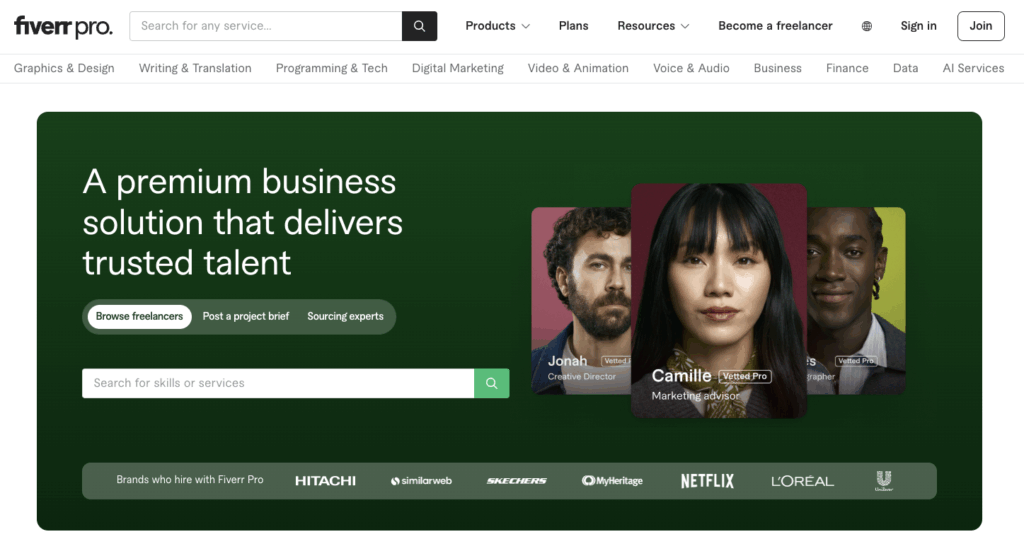
Fiverr is a global online marketplace that revolutionized the gig economy by pioneering the service-as-a-product model. The platform standardizes freelance services into fixed-price ‘Gigs’, removing the uncertainty of hourly billing and lengthy negotiation. It operates on a massive scale, connecting millions of businesses with freelancers from over 160 countries across 700+ service categories.
To cater to high-end business needs, the company launched Fiverr Pro, a premium tier that distinguishes itself from the open marketplace. While standard Fiverr allows anyone to sell, Fiverr Pro is more exclusive and offers vetted talent, designed for serious business buyers.
How it works
Fiverr operates like an e-commerce store for digital services. Instead of posting a job and waiting for applications, buyers browse a catalog of gigs (e.g., “I will design a logo for $50”) that have clear deliverables, prices, and deadlines defined upfront. A client simply clicks to purchase a service, pays in advance, and the funds are held in secure escrow. The freelancer then completes the work, and the money is released to them only after the client approves the final delivery.
For Fiverr Pro users, the experience is elevated through curation and collaboration tools. Pro clients gain access to a catalog of hand-vetted expert freelancers and use team accounts to collaborate with colleagues on the hiring process.
Key features
- Service-as-a-Product (Gigs): Services are packaged like products with fixed prices and clear scopes, eliminating the “guessing game” of hiring.
- Fiverr Pro Vetting: A rigorous manual vetting process ensures that “Pro” sellers represent the top 1% of talent, verified for both professional excellence and service quality.
- Team & enterprise solutions: Fiverr Pro offers business tools like shared payment methods, project tracking, and worker classification assistance for larger organizations.
- Money-back guarantee: Payments are held in escrow and are only released when the buyer is satisfied with the work.
Best for
The standard Fiverr marketplace is best suited for individuals, solo entrepreneurs, and budget-conscious buyers who need quick, well-defined tasks completed efficiently. It is the go-to platform for “one-off” digital services, such as a podcast intro, a quick translation, or basic graphic design, where speed and low cost are the primary priorities.
Fiverr Pro is the better alternative for small businesses, agencies, and corporate teams that require guaranteed quality and reliability.
5. Freelancer.com
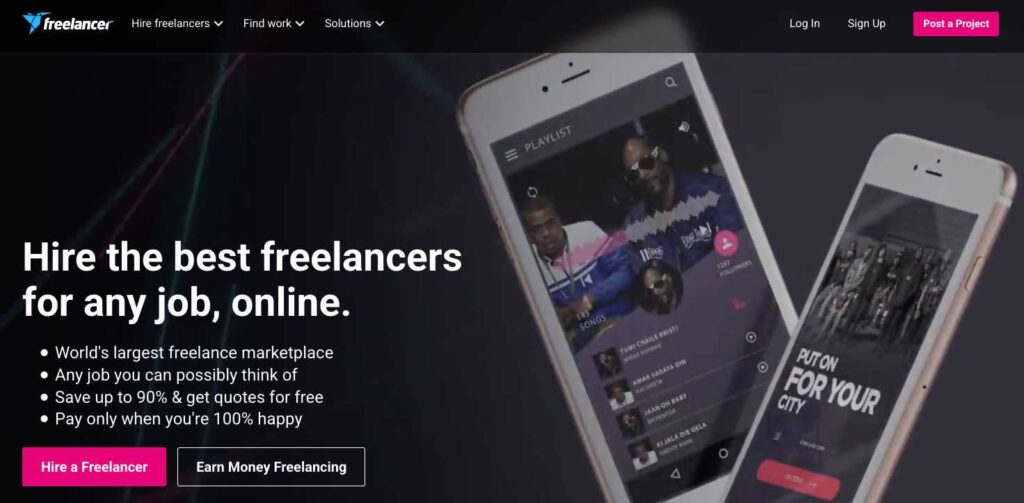
Freelancer.com is a massive, open marketplace that offers access to an enormous pool of WordPress talent, ranging from entry-level developers to seasoned experts, at competitive rates. Freelancer.com is an open ecosystem. While this allows for lower costs and rapid hiring, it places the onus of vetting on the client.
How it works
The hiring process on Freelancer.com is driven by a competitive bidding system. A client posts a project with a description of their WordPress needs, whether it’s a simple plugin fix, a theme customization, or a full site build. Freelancers from around the globe submit bids with their proposed price and timeline. The client can then browse these proposals, chat with candidates, and review portfolios before making a selection.
Unfortunately, because the barrier to entry is low, the platform is saturated with developers of varying skill levels. Finding a true expert often requires sifting through many low-quality proposals. Moreover, posting a project often results in an immediate flood of generic copy-paste bids from bots or agencies that haven’t read the project brief.
Key features
- Massive talent pool: Access to millions of developers ensures that even niche WordPress requests receive bids within minutes.
- Competitive bidding: The open bidding model often drives prices down, making it one of the most cost-effective platforms for budget-conscious projects.
- Contest mode: A unique feature allowing clients to crowdsource WordPress theme designs or UI mockups from hundreds of entrants before hiring.
- Preferred Freelancer Program: A tier of “Recruiter” verified talent representing the top 3% of users, offering a higher level of reliability for enterprise clients.
- Milestone payments: Financial protection for the client, ensuring money is only released when the work is approved.
- Desktop app tracking: A time-tracking tool that takes random screenshots of the freelancer’s screen, providing transparency for hourly contracts.
- Fee structure: The platform charges fees to both sides, and clients can face various “upgrade” fees for features like making a project private or sealing bids.
Best for
Freelancer.com is best suited for budget-conscious business owners and technical project managers who have the time and expertise to screen candidates thoroughly. It is a decent choice for simple, well-defined WordPress tasks, such as fixing a CSS error or installing a plugin, where cost is the primary factor.
However, it is not ideally suited for clients who need a “hands-off” experience or who lack the technical knowledge to verify code quality. Unlike vetted platforms, the client is 100% responsible for testing the developer’s skills. Hiring the wrong person can lead to bloated code or security vulnerabilities in your WordPress site. The open nature of the platform means clients must be vigilant against low-quality bids and be prepared to manage the project actively to ensure the final deliverable meets standards.
6. Lemon.io
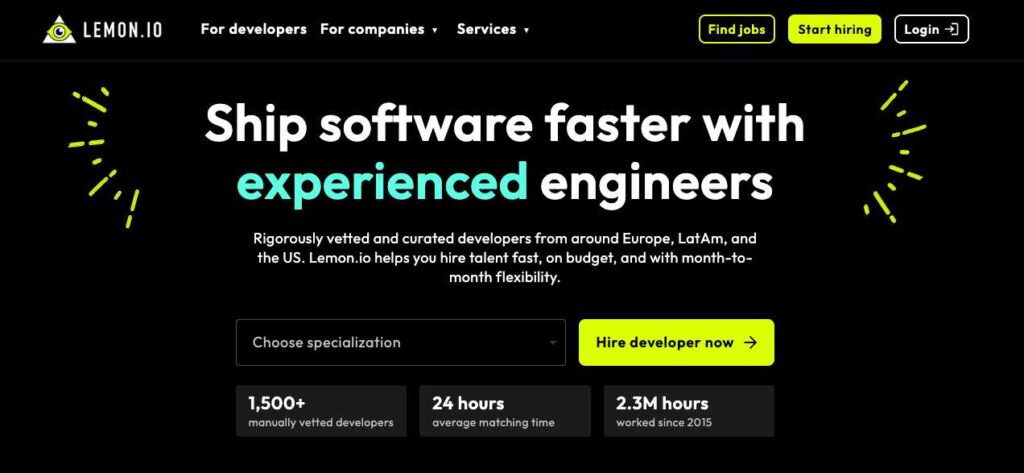
Lemon.io is a boutique vetting and matching platform that connects early-stage startups with high-quality freelance developers, primarily from Eastern Europe, at competitive rates. It positions itself as a faster, more affordable alternative to Toptal. They heavily vet their talent, accepting only about 1% of applicants (dubbed the “top 1%”). While they are a generalist software engineering platform (covering Python, React, Node.js, etc.), they have a strong contingent of PHP and WordPress experts.
How it works
The Lemon.io model is designed for speed and human intervention. A client submits a request detailing their project needs, and instead of browsing profiles, they wait for Lemon.io’s internal matching team to find a candidate. Within 24 to 48 hours, the platform introduces the client to 1–2 hand-picked developers who fit the technical requirements and company culture.
Once matched, the client can interview the developer to ensure a good fit. If they choose to proceed, they pay an initial deposit (typically the first week’s payment) to kickstart the engagement. The platform offers a paid trial period (up to 20 hours); if the client is not satisfied with the developer’s performance during this time, Lemon.io refunds the money or applies it to a replacement developer.
Key features
- Human-assisted matching: There are no algorithms guessing the best fit; a dedicated team manually matches clients with developers to ensure soft skills and technical needs align.
- Rapid turnaround (24-48 Hours): One of the fastest matching times in the industry, making it ideal for teams that need to scale immediately.
- Rigorous vetting: Their 4-step process includes English proficiency checks, soft skills interviews, and hard technical testing (including live coding), ensuring developers are “startup-ready.”
- Zero-risk replacement: If a developer quits or isn’t performing, Lemon.io replaces them, often prioritizing the replacement request above new clients.
Best for
Lemon.io is best suited for startups and scale-ups looking for long-term, dedicated WordPress developers to join their team as contracted employees. It is a good choice for a CTO or non-technical founder building a complex WordPress-based SaaS, a high-traffic WooCommerce store, or a custom web application who needs a reliable, full-stack engineer at a reasonable rate.
7. Gun.io
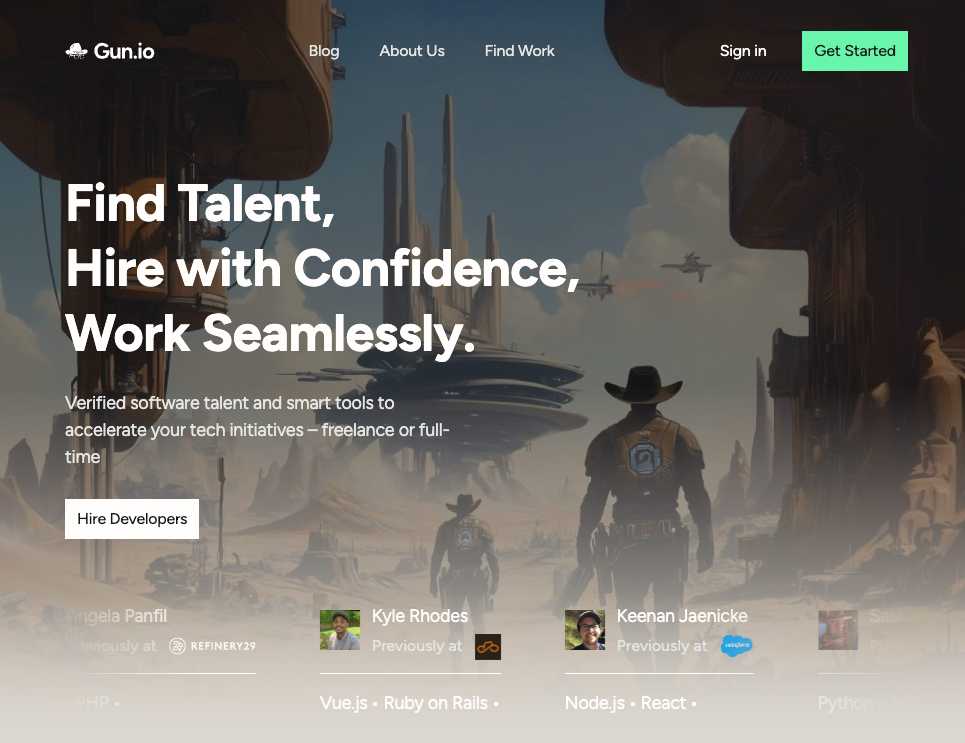
Gun.io is a premium talent agency and matching platform that connects companies with elite software developers. The company began as a community for open-source contributors before evolving into a highly vetted network of senior engineers. Unlike generalist marketplaces that rely on algorithms or manual bidding, Gun.io functions closer to a “headhunter” service, using a team of senior developers to vet and match talent personally.
While it is a generalist platform covering many technologies (like React, Python, and iOS), it maintains a strong network of vetted WordPress experts.
How it works
Gun.io creates a streamlined, white-glove hiring experience designed to replace traditional recruitment. A client starts by posting a job description or discussing their needs with a Gun.io account manager. Instead of flooding the client with resumes, the platform’s internal team of senior engineers reviews the requirements and hand-picks a shortlist of 2–3 candidates who are technically verified and culturally aligned. This matching process typically takes 3–5 business days.
Once matches are presented, the client interviews the candidates to assess fit. If a selection is made, Gun.io handles all the administrative overhead, including contracts, billing, and payouts. The platform operates on a retainer or hourly contract basis, allowing clients to hire developers as contractors or seamlessly transition them to full-time employees for a placement fee.
Key features
- Vetted by engineers, not recruiters: All talent is screened by senior software engineers through technical interviews and code reviews, ensuring a higher standard of technical competence than typical HR-led vetting.
- Rapid matching (3–5 Days): Clients receive a curated shortlist of candidates quickly, eliminating the need to sift through hundreds of proposals.
- Retainer & monthly billing: The model supports long-term stability, often allowing clients to reserve a developer’s time (e.g., 20 or 40 hours/week) rather than managing micro-transactions for every task.
- Hiring Guarantee: Gun.io backs its matches with a replacement guarantee; if a developer doesn’t work out or leaves, they prioritize finding a replacement immediately.
- Full-time conversion: Gun.io has a clear, structured path for clients to buy out a contract and hire the developer as a permanent full-time employee.
Best for
Gun.io is best suited for funded startups, scale-ups, and established businesses looking to add a dedicated, senior-level WordPress engineer to their team for the long haul. It is an ideal solution for companies building complex, custom WordPress applications (like high-scale WooCommerce stores or headless WP setups) who need a partner that acts like a team member rather than a task-doer.
However, with rates typically ranging from $75 to $150+ per hour, Gun.io is on the more expensive side of niche WordPress platforms or general marketplaces.
Also, the platform specializes in senior software engineers. If you only need a standard brochure site or minor theme configurations, you will likely be paying “senior engineer” rates for work that a junior developer could handle elsewhere. Last but not least, while they have WordPress experts, Gun.io is not a “WordPress-only” community like Codeable. Their ecosystem is broader, which means the support team and platform features are not exclusively tailored to the nuances of the WordPress ecosystem (plugins, themes, hosting environments).
8. PeoplePerHour
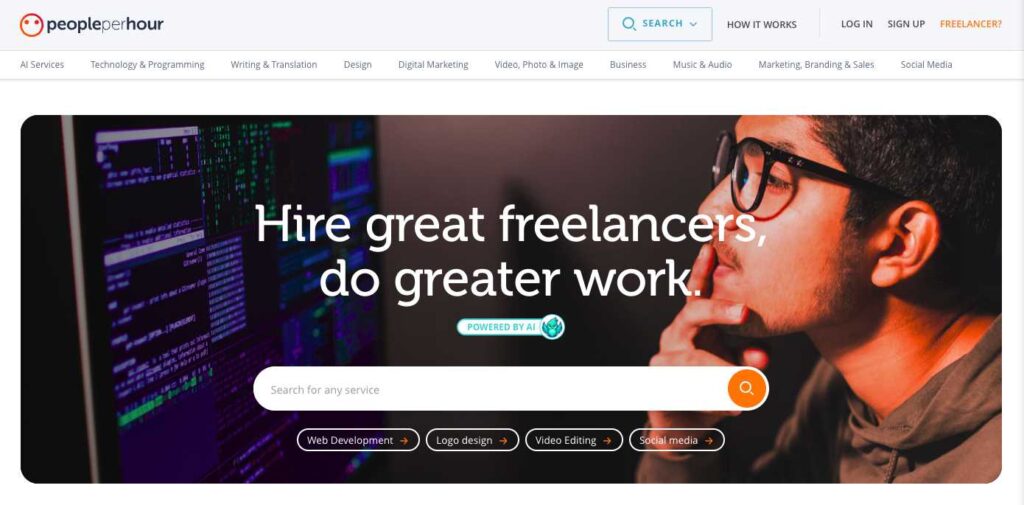
PeoplePerHour is a UK-based freelance marketplace that connects small businesses with an international community of freelancers. It is one of the longest-running platforms in the gig economy. Unlike completely open marketplaces that rely solely on bidding, PeoplePerHour pioneered the “Offer” concept (originally called “Hourlies”), which allows freelancers to package their services as fixed-price products.
The platform hosts a massive community of over 3 million freelancers. While it is a generalist platform, it has a heavy concentration of web developers and digital creatives. For WordPress clients, this means access to a vast, uncurated pool of talent ranging from budget-friendly offshore developers to higher-end local experts.
How it works
PeoplePerHour offers a hybrid hiring model that gives clients two distinct ways to find talent. The most common method is posting a custom project, where the client writes a brief describing their WordPress needs. The platform’s AI matches this brief with relevant freelancers, who then submit proposals with their price. Clients can also browse “Offers,” which are pre-packaged services with a fixed price and delivery time, such as “I will optimize the speed of your WordPress site for $50.”
Key features
- Offers (fixed-price bundles): A signature feature where developers package specific tasks (e.g., “Install Avada Theme,” “Remove Malware”) for a set price, allowing clients to buy services like products without negotiation.
- CERT ranking algorithm: A proprietary scoring system (Content, Engagement, Repeat usage, Trust) that ranks freelancers from Level 1 to 5, helping clients identify reliable performers based on data rather than just claims.
- Local talent matching: The platform allows clients to filter specifically for freelancers in their own country or city, which is useful for businesses wanting local timezone alignment.
- Project streams: A unified dashboard that keeps all communication, files, and transaction history in one thread to prevent lost emails.
Best for
PeoplePerHour is best suited for small business owners and budget-conscious entrepreneurs who need specific, well-defined WordPress tasks completed quickly. It is an excellent source for productized services, such as speed optimization, site migration, or standard theme installation, where the scope is clear and the risk of misinterpretation is low. It is also a good fit for clients who prefer working with freelancers in their own time zone (specifically in the UK and Europe) but want the lower fees and flexibility of a freelance marketplace rather than an agency.
However, because the talent is not strictly vetted for technical security, there is a risk of hiring developers who leave backdoors or use insecure coding practices.
How to evaluate WordPress developers and their portfolios
When you choose to hire on a non-managed platform like Upwork or Fiverr, you are essentially stepping into the role of a Chief Technology Officer. Without the safety net of a vetted network, your ability to assess technical competence is the only defense against a failed project. A common mistake is judging a candidate solely by the visual design of their previous work, which can be misleading in the WordPress ecosystem.
How do I evaluate the portfolio of a WordPress developer?
To evaluate a portfolio effectively, you must look past the aesthetics and audit the functionality. A visually stunning site might simply be a premium theme with imported demo content, so you need to verify if the candidate actually wrote the code or just configured a template.
Key portfolio forensics to perform:
- Verify role attribution. Explicitly ask the developer, “Did you design this layout, or did you implement a provided design?” to distinguish between designers and engineers. You should also clarify if they wrote the theme code themselves or customized an existing file. Ask which development tools they used to build the design.
- Conduct a functionality audit. Ignore the colors and layout to look for custom features, such as mortgage calculators, booking engines, or complex search filters. These features require actual PHP and JavaScript engineering logic, whereas simple brochure sites often rely on basic settings.
- Check performance scores. Run the portfolio URLs through Google PageSpeed Insights to check for optimization. A site that scores poorly (e.g., 20/100) on mobile suggests the developer neglects fundamental standards like caching and image optimization, regardless of how “pretty” the site looks.
The technical interview checklist
Even if you are not technical, asking specific questions can reveal a developer’s maturity level and help you spot dangerous red flags.
Critical questions to ask:
- How do you handle version control?
A professional answer involves using Git, working locally, and pushing to a staging server. If they say they edit files directly on your server using FTP, this is a catastrophic risk where one syntax error can take your live site down. - How will you ensure the site is secure?
Look for answers involving server-level firewalls, disabling file editing, and securing HTTP headers. If they only mention installing a security plugin, it indicates a lack of deeper security knowledge. - What is your approach to page builders vs. Gutenberg?
In 2025, modern developers should be proficient with the Block Editor (Gutenberg) and Full Site Editing. Over-reliance on heavy page builders for every aspect of the site can create “bloatware” that is difficult to maintain. - Can I see a code sample?
If they have a GitHub repository, check for “spaghetti code,” such as dumping thousands of lines of logic into the functions.php file instead of organizing it into classes or plugins. You should also ensure sensitive data, like API keys, are not hardcoded into the PHP files.
General marketplaces vs WordPress-specialized platforms: Which to choose?
Choosing between a general marketplace and a specialized platform is essentially about how much risk you are willing to take and how much work you want to do yourself. The “WordPress Developer” title covers everything from a $20/hour beginner to a $150/hour software engineer, so picking the right venue is the first step in avoiding disaster.
When to choose general marketplaces
General marketplaces like Upwork or Fiverr are often the best choice if you have a clear plan and the time to manage it. You should consider them if:
- Budget is your primary concern. These platforms offer the lowest entry prices and let you find help for as little as $15 per hour.
- The project scope is simple. For well-defined tasks like “remove malware” or “convert design to Elementor,” the transactional model of Fiverr is highly efficient.
- You have technical knowledge. Since these platforms do not vet for code quality, you have to screen candidates yourself to avoid poor work.
- You need non-WordPress work. If you need a logo design or virtual assistant along with your website edits, a generalist platform is a convenient one-stop shop.
When to choose specialized platforms
Specialized platforms are designed for stakeholders who cannot afford a failed project. You should choose a platform like Codeable or Toptal when:
- The project is mission-critical. If a security breach or downtime would cost you more than the developer’s hourly rate, you need the insurance of pre-vetted talent.
- You lack technical expertise. If you don’t know how to audit PHP code, relying on a platform that has already tested the developers for you is the safest path.
- The timeline is tight. Vetting dozens of proposals on Upwork can take days, whereas specialized platforms can match you with an expert in hours.
Codeable as the strategic middle ground
Codeable occupies a unique spot between the chaos of open marketplaces and the rigid, high-commitment model of recruitment agencies, offering the flexibility to handle everything from a quick bug fix to a full-scale custom build.
This model enables true strategic partnerships. Instead of hiring a transactional freelancer who blindly completes a task without understanding your business, you get an expert who acts as a consultant. This avoids the “task completion without bigger picture” problem, ensuring that your developer considers how a new plugin might affect your site speed or future scalability.
The verdict: Why we recommend Codeable
For business owners and marketing managers who value their time and peace of mind, Codeable is the clear recommendation. While other platforms treat WordPress as just one skill among thousands, Codeable stands alone as the only platform exclusively dedicated to this ecosystem. This focus ensures that every expert you meet understands the technology deeply, from complex theme architecture to high-traffic database optimization.
If you are ready to stop managing technical drama and start building with confidence, Codeable provides the safest path forward.

20 000+ businesses of every shape and size have already trusted us to hire WordPress developers and scale their growth.
FAQs: Developer’s guide to joining freelance platforms
Understanding the economics and demand trends of freelance platforms is crucial for any developer looking to build a sustainable career. Let’s break down what you need to know before you sign up.
What kind of payment can I expect from these platforms?
Earnings on freelance platforms vary wildly, generally ranging from $15 to over $200 per hour depending on your location, specialization, and the platform you choose. While entry-level tasks like theme installation might only command lower rates, specialized engineers working on enterprise architecture often bill at the top of that range.
You must also account for platform fees, which significantly reduce your take-home pay.
- Commission structures: Budget marketplaces like Fiverr charge a flat 20% commission on your earnings. Upwork uses a variable fee system where you pay between 0% and 15% depending on the contract size.
- Hidden costs: Beyond commissions, consider the cost of “Connects” or bidding fees required just to apply for jobs on some open marketplaces.
- Protected rates: Specialized platforms like Codeable enforce a recommended rate floor (typically $80–$120 per hour) to ensure experts are paid fairly without having to undercut each other.
Ultimately, the trade-off is between volume and value. Lower-fee platforms may offer more frequent, smaller projects, while vetted platforms provide fewer but much higher-paying opportunities.
Is there still demand for WordPress developers?
Yes, the demand is strong, but the market has shifted dramatically. The era of the generic webmaster is ending, and clients are no longer looking for someone to just install a theme. Instead, the demand has intensified for specialized engineers who can handle complex technical challenges.
The most lucrative opportunities in 2025 are in specific, high-skill niches:
- Headless WordPress: There is a growing need for developers who can use WordPress as a backend API while building front-ends with frameworks like React or Next.js.
- eCommerce scaling: As WooCommerce stores grow, clients need engineers capable of optimizing databases and building custom checkout flows for high-traffic sites.
- Accessibility: With stricter digital laws, certified experts in WCAG compliance command a premium.
Getting accepted: Platform vetting processes and requirements
Rigorous vetting is the primary way platforms protect both clients and high-quality developers. When a platform has lenient acceptance standards, it often floods the market with unqualified competition, which drives down rates and frustrates clients.
On generalist platforms, expert developers often struggle to distinguish themselves from beginners and end up undercharging for projects, trying to outbid them.
Platforms like Codeable maintain an acceptance rate of less than 2%. This strict barrier to entry ensures that when you are accepted, you are competing only with other proven experts, maintaining premium rates and high client trust.
 Dream It