



If Fiverr keeps handing you mixed results on WordPress and development work, the real problem might be the model, not the freelancer you picked. Most people searching for a Fiverr alternative aren’t chasing a lower price. They want reliable work that arrives finished, tested, and ready to use.
To cater to this need, the developer-for-hire market has split into distinct categories, with each one solving a different Fiverr weakness. Open marketplaces, premium vetted networks, low-fees alternatives, design platforms, and niche specialists all serve different requirements, and the right fit depends on the job you are planning to outsource. This guide breaks down the strongest options, what each platform charges, and where having a WordPress specialist fits best.
Why are people looking for Fiverr alternatives?
Buyers leave Fiverr for four structural reasons: uneven quality, a gig model built for one-off tasks, fees that run higher than the advertised rate, and a ranking score that’s hard to read. And this is a universal problem because of how the platform is designed, not because of any single seller.
Some of the key issues with hiring developers on Fiverr are:
- Open sign-up, uneven quality. Almost anyone can list a service, so skill levels vary a lot.
- A model made for one-off work. Gigs are built around single, well-defined tasks. Work that grows or changes means finding and briefing a new seller each time.
- Fees above the sticker price. The headline commission isn’t the whole cost. Buyer fees stack on top, so the real total is higher than the first number you see.
- A ranking score that’s hard to read. Fiverr’s Success Score grades each gig relative to other freelancers and combines several performance signals into one overall number. Because it’s relative and blended, sellers can’t always tell why it shifts.
These aren’t only talking points. On Fiverr’s own community forum, one buyer who had been satisfied with past orders described hiring a freelancer to build a website and having it turn out very differently, which is the kind of uneven result that sends people to compare platforms in the first place.
What are the main alternatives to Fiverr?
The strongest Fiverr alternatives fall into five groups: open marketplaces, premium vetted networks, design platforms, niche specialists, and low-fee platforms. Each group answers a different version of what buyers want after Fiverr, so the right pick now depends on the job in front of you rather than a single winner.
The field also keeps expanding. The freelance platforms market is worth $7.3 billion in 2026 and is projected to reach $24.2 billion by 2033, growing at 18.6% a year. That fragmentation is why “which alternative” now depends on the job.
Here is how the main platforms compare, grouped by the kind of work they suit.
Codeable

Codeable is the marketplace that vets every expert for WordPress specifically, rather than general web development. It works from one fixed-price estimate built on an $80–$120 hourly rate, with a 17.5% service fee and no bidding, and a six-stage screening process that admits roughly 2% of applicants. Delivered work is covered by a 28-day bug-fix warranty, and funds sit in escrow until you mark the project complete. It handles WordPress and WooCommerce projects of any size, priced for a reliable outcome rather than the cheapest gig.
Upwork
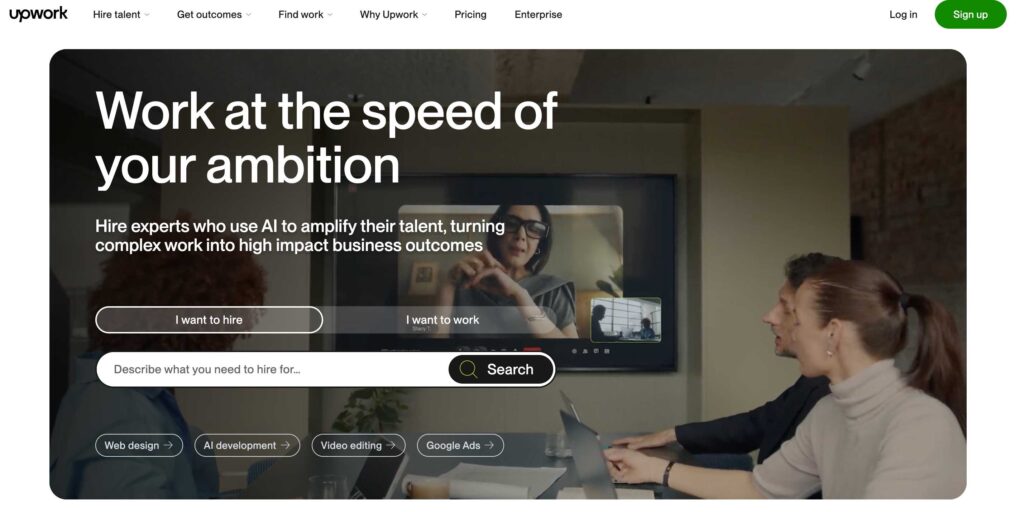
Upwork is an open marketplace built around contracts, milestones, and escrow rather than fixed gigs. It charges freelancers a variable service fee of 0–15% per contract, which replaced the old flat 10% in May 2025, and adds a separate client marketplace fee. Vetting is light because the buyer screens candidates, though an Expert-Vetted tier covers what Upwork calls its top 1%. It suits structured, mid-to-long-term contract work, but quality still varies on the open tier.
Toptal

Toptal is a premium vetted network for high-stakes technical hires across development, design, and finance. It publishes no platform percentage; its margin sits inside the hourly rate, and clients pay a refundable deposit to start. Vetting is human-led and multi-stage with a test project that, by Toptal’s own claim, admits about 3% of applicants. It fits work where a vetted senior hire matters more than price, with the trade-offs of opaque pricing and premium rates.
Freelancer.com
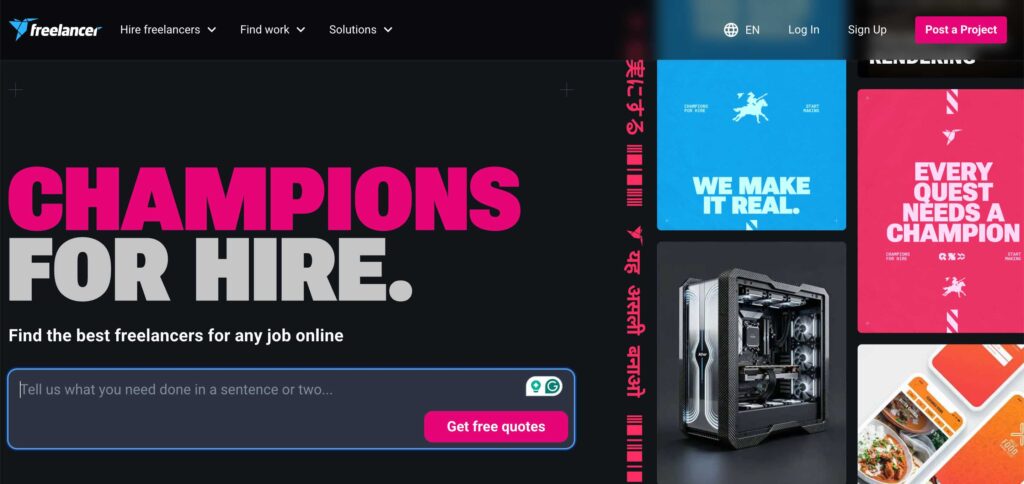
Freelancer.com is a large open marketplace that also runs contests. It charges roughly 10% of the awarded project value, or a small flat minimum, whichever is greater. Vetting is minimal, so the buyer does the screening. It works for price-competitive global access and contest-style briefs when you can vet talent yourself, though the quality spread is wide.
PeoplePerHour
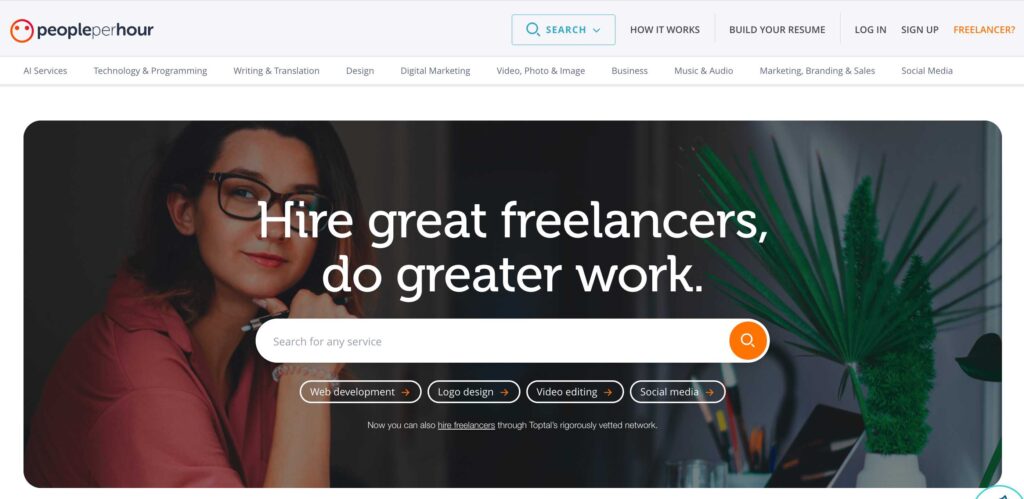
PeoplePerHour is a UK-based marketplace with an application step before sellers can list. Its seller fee is tiered by lifetime billing with each client: 20% on the first £250, 7.5% up to £5,000, then 3.5% above that, and buyers pay a separate service fee. Screening is a light application review rather than deep testing. It suits UK and EU mid-market projects, with a smaller talent pool than Upwork.
Guru
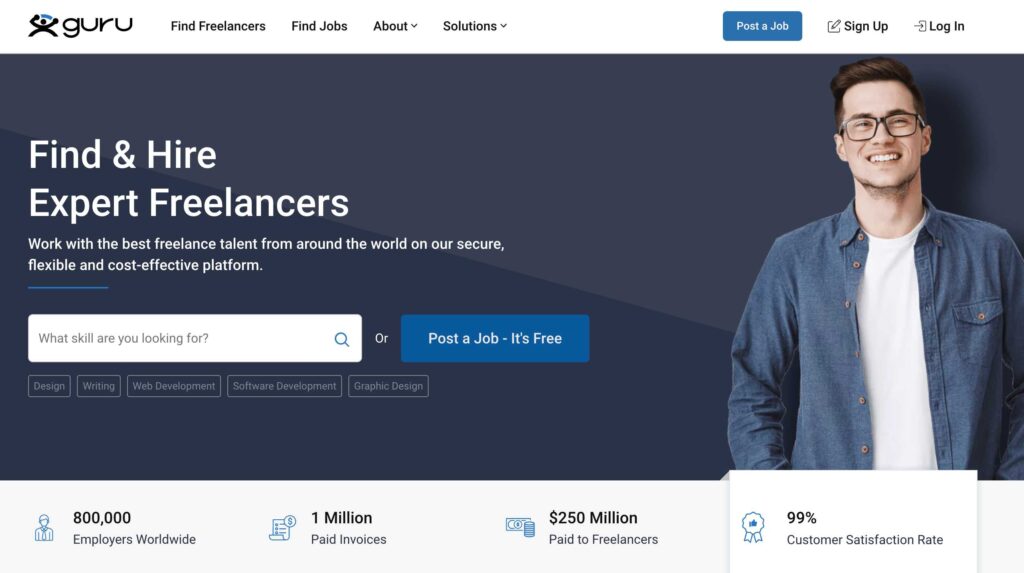
Guru keeps one of the lowest mainstream commissions: a freelancer job fee of 5–9% that varies by membership tier, with SafePay escrow for milestones. It is an open marketplace, so the buyer does the screening. It works for cost-conscious buyers who still want escrow protection, but there is no quality vetting.
Contra
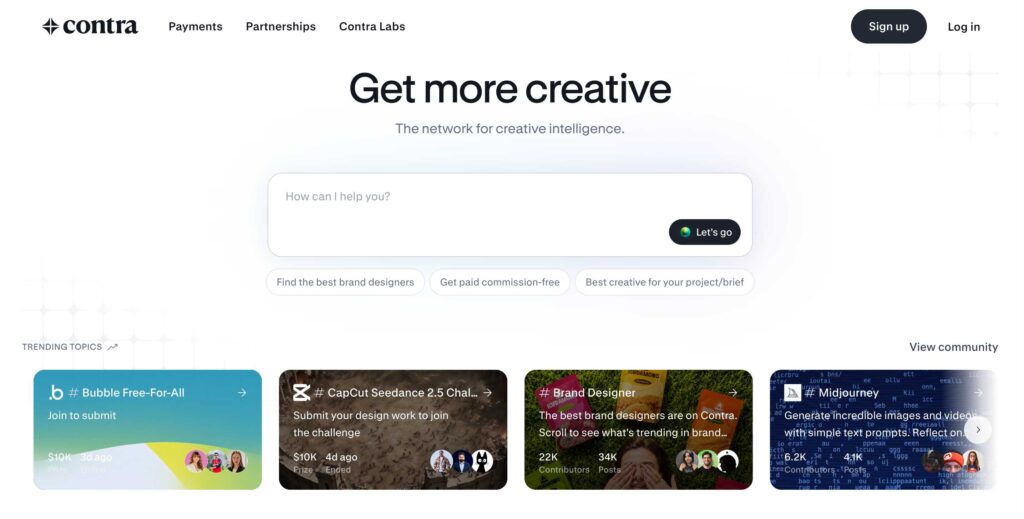
Contra takes no commission from freelancers; instead, clients pay a per-payment fee that is capped at $29. There is no platform screening, and the talent pool skews toward creative work. It fits creative projects and low-fee transactions, with fewer developers and no quality screen.
99designs

99designs is a design platform built around contests, with fixed logo packages from $249 to $1,050 and a 5% client fee on one-to-one projects. Designers self-select into tiers, and higher tiers gate entry on win rate. It covers logos, brand identity, and packaging — design work, not development.
Arc.dev

Arc.dev is a vetted network of general developers that is free to start searching, with its margin built into the talent rate. Its screening is developer-focused and, by Arc’s own claim, admits the top 2%, but it tests general development rather than WordPress. It works for vetted general developers on contract or full-time, without a WordPress specialism.
The table below sums up how the nine compare.
| Platform | Fee | Vetting model | Typically used for | Limitation |
| Upwork | Freelancer 0–15%; separate client marketplace fee | Open; Expert-Vetted top tier | Structured contract work | Quality varies on open tier |
| Toptal | No public fee; margin in the rate; refundable deposit | Multi-stage, ~3% (own claim) | High-stakes technical hires | Opaque pricing, premium rates |
| Freelancer.com | ~10% or flat minimum | Minimal; buyer screens | Price-competitive global access | Wide quality spread |
| PeoplePerHour | 20% / 7.5% / 3.5% seller tiers; separate buyer fee | Light application review | UK and EU mid-market projects | Smaller talent pool |
| Guru | 5–9% freelancer fee | Open; buyer screens | Cost-conscious buyers wanting escrow | No quality vetting |
| Contra | 0% freelancer; client fee capped at $29 | None; skews creative | Creative, low-fee work | Few developers, no screen |
| 99designs | Logo tiers $249–$1,050; 5% client fee | Tier self-selection by win rate | Logos, brand identity, packaging | Design only, not dev |
| Arc.dev | Free to search; margin in rate | Developer-focused, top 2% (own claim) | Vetted general developers | No WordPress specialism |
| Codeable | 17.5% fee; $80–$120/hr fixed estimate | 6-stage, WordPress-specific, ~2% | WordPress and WooCommerce projects | WordPress-focused, priced for quality |
Which Fiverr alternative is best for WordPress?
Codeable is the WordPress-specialist alternative to Fiverr, vetting every expert for WordPress rather than general web development. That focus is the whole difference. On a generalist platform, a WooCommerce job draws from a pool screened for web development broadly, so WordPress depth is left to chance.
The advantage of choosing Codeable shows up in three places:
- Vetting and price. A rigorous, WordPress-specific screening lets through only about 2% of applicants, and one fixed estimate replaces bidding, so quality isn’t a gamble and cost isn’t a scramble for the lowest number.
- Protection after delivery. Your funds sit in escrow until you mark the project complete, and a 28-day bug-fixing warranty then covers the work. Many platforms protect your payment during a project, but not the quality once it ships.
- Access and reliability. Codeable Experts usually start engaging within hours, and the model fits everything from mid-market fixes to large, high-stakes builds.
Codeable reports that 96% of clients return with more work, and agencies have used it to triple their revenue.
Is Fiverr cheaper than the alternatives?
Fiverr’s real cost is roughly 24–35% of the order once buyer fees are added, not the 20% commission it advertises. The 20% seller commission comes out of the freelancer’s side, and buyers pay 5.5% plus $3.50 on orders under $200 on top.
So, on a $100 order, the buyer pays $109 while the seller keeps $80, so Fiverr’s slice is about 29%. The percentage climbs on smaller orders and eases on larger ones.
Compared to this, you have:
- Upwork, which charges freelancers a variable 0–15% per contract, set in May 2025, not the flat 10% older guides still quote.
- Codeable, which has a straightforward 17.5% service fee built into one fixed price, with no bidding and no surprise buyer fees at checkout.
- Guru (5–9%) and Contra (a client fee capped at $29), which offer “zero commission from freelancers,” though that usually shifts the cost to the client rather than removing it.
How does vetting differ across platforms?
Vetting ranges from open sign-up, where the buyer screens everyone, to curated networks that admit a small share of applicants after multi-stage tests. On Fiverr, Freelancer.com, and regular Upwork, anyone can list a profile, so the checking falls to you. Curated networks like Toptal and Codeable do that work upfront.
However, there are a few caveats that you ought to know:
- “Top 3%” and “top 2%” are each platform’s own claim, not independent facts. Toptal’s screening runs for several weeks and includes a test project.
- Fiverr Pro and Upwork Expert-Vetted also vet, each claiming the top 1% of their talent, so screening itself isn’t rare.
- Codeable’s difference is focus. Its process is WordPress-specific at every stage, so the exam tests WordPress work rather than general web development.
For WordPress hiring, that last point matters the most, because broad vetting only checks whether someone can code, while specialist vetting checks how well they can code for WordPress and WooCommerce.
How do you choose the right Fiverr alternative?
Choose by the work: budget and breadth point to open marketplaces, high-stakes hires to curated networks, and WordPress projects to a WordPress specialist. Once you know which of those describes your job, the rest of the decision falls into place around a few practical questions.
Start with the fee model, since it should match the size of the project. Flat-fee gigs make sense for small one-off tasks, fixed-price estimates work well for clearly defined scopes, and retainers are the better fit when the work is steady and ongoing. That last point matters more than most buyers expect, because planning for what happens after launch is far easier when a platform supports continuing relationships rather than a fresh gig every time. Codeable, for example, runs retainers on weekly-to-yearly cycles with no lock-in, alongside fixed-price maintenance and audit packages.
Specialism is the final filter. For a WordPress or WooCommerce build, a specialist platform removes the guesswork, so you spend far less time checking whether a developer really knows the platform and more of it on the work itself.
Match the platform to the project
The freelance market has stopped being one-size-fits-all, and for WordPress work, that’s good news. Instead of hoping a general marketplace turns up the right person, you can pick a platform built around the exact work you need done.
For WordPress and web development, that means choosing specialist vetting over an open marketplace. If that’s your project, see how Codeable matches you to a pre-vetted WordPress expert.

Get matched with the developer
that is perfect fit for your WordPress or WooCommerce needs.
Start a project
 Dream It