



If hiring a WordPress developer on Upwork has meant reading through 40 proposals just to find one person who truly knows WooCommerce, you’re not alone. A single WordPress job post pulls in dozens of pitches, most from generalists who list the platform somewhere between logo design and data entry. By the time you have sorted the real specialists out from the noise, hours are gone, and the actual work has not even started.
The good news is that Upwork is far from your only option, and the alternatives are more varied than most ranking lists admit. Some are gig marketplaces built for quick, packaged jobs. Others screen every applicant before you ever see them. A few take no commission at all. And for WordPress work specifically, there is a whole category built around it, worth knowing before you post your next job.
Key points
- Upwork alternatives fall into four models: gig and bidding marketplaces, vetted talent networks, commission-free platforms, and niche specialists built around one kind of work.
- Codeable is a WordPress-focused marketplace that vets every developer and swaps bidding for a single fixed-price estimate.
- The strongest alternatives are rarely the cheapest, because they charge a higher fee in exchange for vetting and the hours you save.
- For WordPress work specifically, a niche specialist matches you with a proven developer instead of leaving you to screen the field yourself.
Why look for an Upwork alternative
People start hunting for Upwork alternatives for two reasons. The 2025 fee changes made long-term contracts pricier, and hiring quality work still means wading through generalist proposals.
Upwork’s freelancer service fee is now variable, set per contract at 0% to 15%, and clients who bring an outside freelancer into a direct contract pay $49 a month for each active contract. For anyone running ongoing relationships, those numbers add up fast.
Money is only half the story, though. The bigger headache is volume and quality. Post a WordPress job, and you can expect dozens of bids, most from generalists who list WordPress alongside a dozen other skills. Discussions on Reddit about Upwork and reviews on G2 circle the same frustration: plenty of pitches, little real signal, and no quick way to tell a true specialist from a padded profile.
None of this makes Upwork the wrong call for every job. The better question is which platform fits the work in front of you, and for a WordPress build, that answer looks different.
The main types of Upwork alternatives
Upwork alternatives fall into four types: general and gig marketplaces, vetted talent networks, commission-free platforms, and niche specialists built around one kind of work. Knowing which type you are looking at makes the choice much simpler, because each one solves a different version of the hiring problem.
Here is how they break down.
- General and gig marketplaces work much like Upwork, with fixed-price gigs or open bidding and a huge, mixed talent pool. They fit when your job is small or standard, and you are comfortable screening candidates yourself.
- Vetted talent networks screen applicants before anyone reaches you, then charge clients a markup for that filter. They fit when you need proven technical skill across broad fields and want the platform to do the vetting.
- Commission-free platforms take no percentage cut of what you pay, usually in exchange for a smaller pool of talent. They fit when budget sits at the top of your list, and you are willing to search a little harder.
- Niche specialists narrow the whole platform to one type of work, so every developer and every buyer is there for the same reason. They fit when your project needs deep, focused expertise rather than a bit of everything.
That last group is where WordPress buyers should pay close attention.
General freelance marketplaces
These are the platforms that work most like Upwork, so they are the natural first stop if you want a familiar setup with a different name on the door. Each one runs on open access and a broad talent pool, and each carries its own mix of fees.
Fiverr
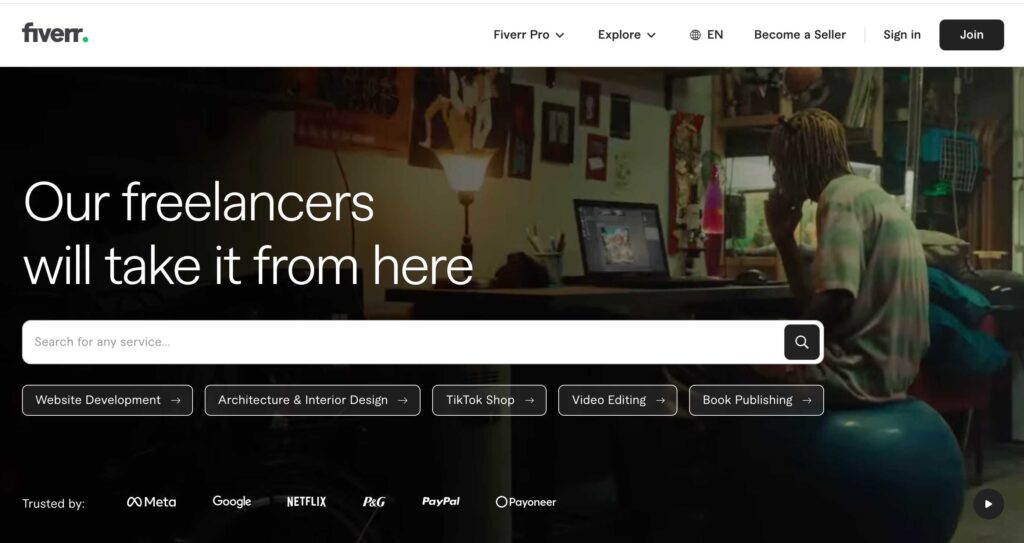
Fiverr sells fixed-price gigs, which means you buy a set package with a clear price and delivery time rather than posting a job and reading through bids. Buyers pay a 5.5% service fee, plus a $3.50 charge on orders under $200, added at checkout on top of the listed gig price.
Freelancer.com
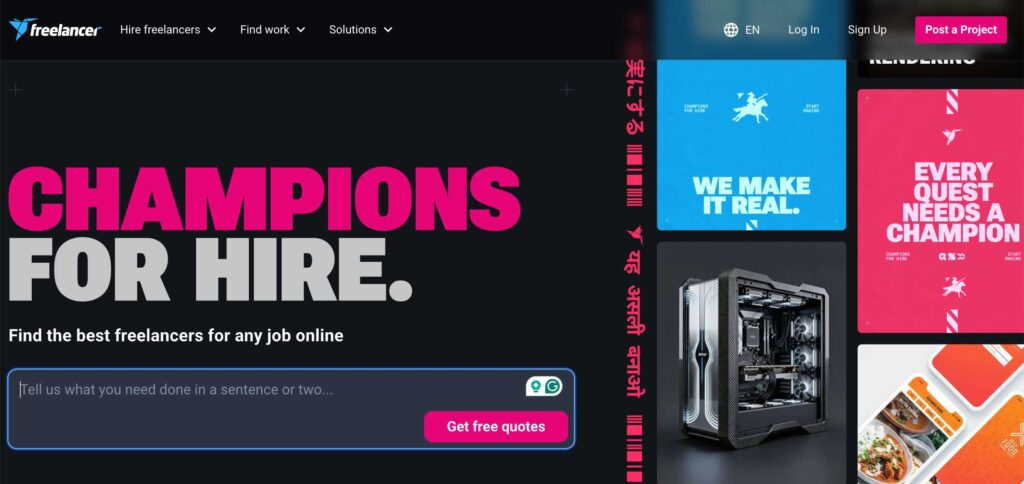
Freelancer.com is the closest structural match to Upwork, built around open bidding and a large, mixed talent pool where quality shifts from one profile to the next. Its fees run 10% or $5 for freelancers and 3% or $3 for clients, whichever amount is greater on each project.
Guru
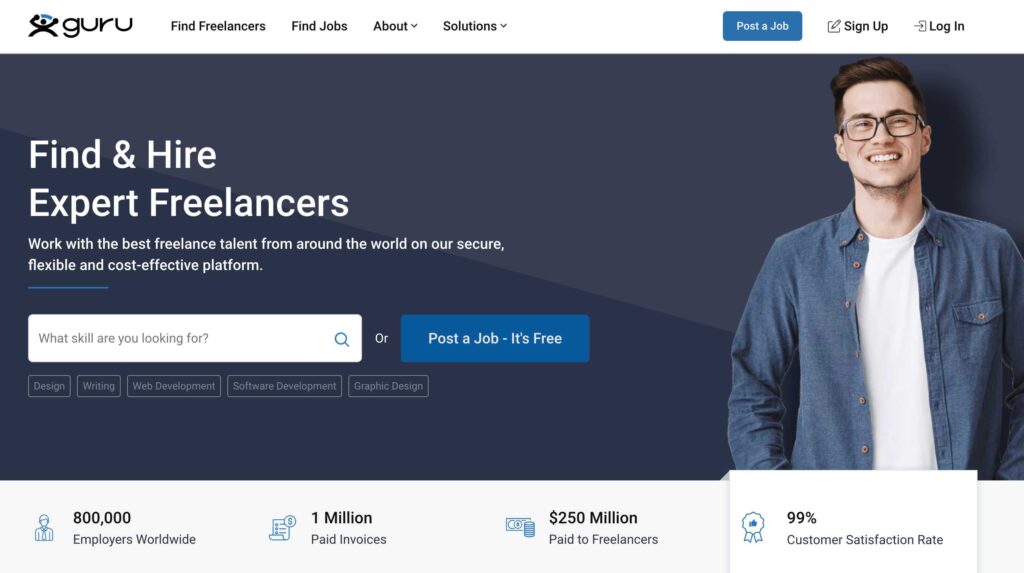
Guru aims at mid-market projects and adds built-in tools for managing work as it moves along. The freelancer job fee is tiered by membership, sliding from 9% down to 5%, and clients pay a separate 2.9% handling fee on each invoice. Guru also lets freelancers pay to have negative feedback removed from their profiles, which is worth factoring in when you read a seller’s ratings.
PeoplePerHour
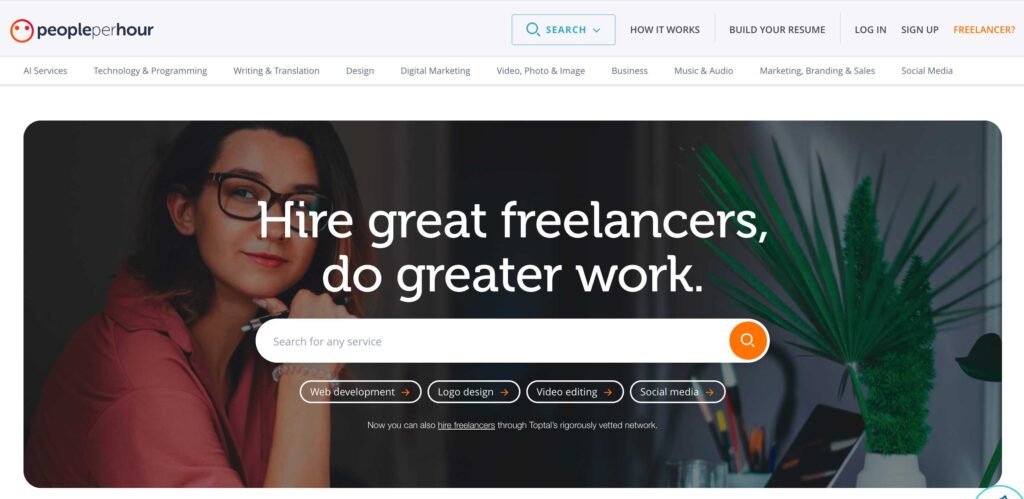
PeoplePerHour has its strongest footing in the UK and EU, which makes it a regional fit more than an all-purpose pick. Its freelancer fee is tiered by lifetime billing per client, dropping from 20% down to 3.5% once earnings pass £5,000 with the same buyer.
Every platform here shares one gap. None of them filters for WordPress skill, so a specialist buyer still ends up sorting generalist bids by hand. To see what a vetted WordPress rate looks like next to open-market pricing, Codeable breaks it down in its WordPress eCommerce developer cost guide.
Vetted talent networks
Vetted networks flip the Upwork model. Instead of opening the doors to everyone and asking you to sort the field, they screen applicants before anyone reaches your shortlist, then charge clients a markup for that filter. You trade a bigger pool for a smaller, pre-checked one.
Toptal

Toptal screens applicants hard but staffs across development, design, and finance rather than WordPress alone. It accepts fewer than 3% of applicants on its own account, then adds a markup to the client rate rather than charging the freelancer a commission.
Arc.dev

Arc.dev focuses on developers and leans toward long-term and full-time remote contracts. It selects for the top 2% of talent by its own account, using expert-led technical screening to build its shortlists.
Both platforms solve the volume-and-quality problem that pushes people off Upwork, and both are worth a look when you need proven technical skill. There is a catch for WordPress buyers, though. These networks spread their vetting across many fields, so a developer who cleared the bar might still be a general engineer rather than a WordPress hand. Codeable narrows the whole platform to WordPress, which means it goes deeper on the exact work a broad network treats as one skill among dozens, such as WooCommerce checkout customization or Gravity Forms integrations.
Commission-free platforms
This group takes a different route to lower costs. Rather than charging a percentage of every project, these platforms drop the commission entirely, usually in exchange for a smaller pool of talent to choose from.
Contra
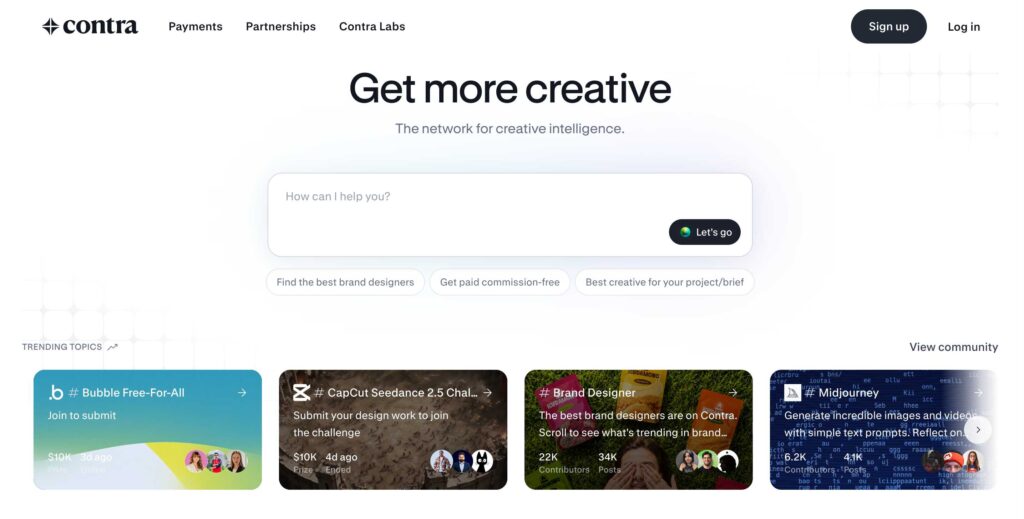
Contra is 100% commission-free, so it takes no cut of what a freelancer earns. This setup can work for budget-minded buyers who are fine with a leaner talent pool. However, while Contra charges no commission, it isn’t free to use: on the free plan, the freelancer pays a per-transaction fee capped at $29, or $29 a month for a Pro plan that waives it.
Jobbers
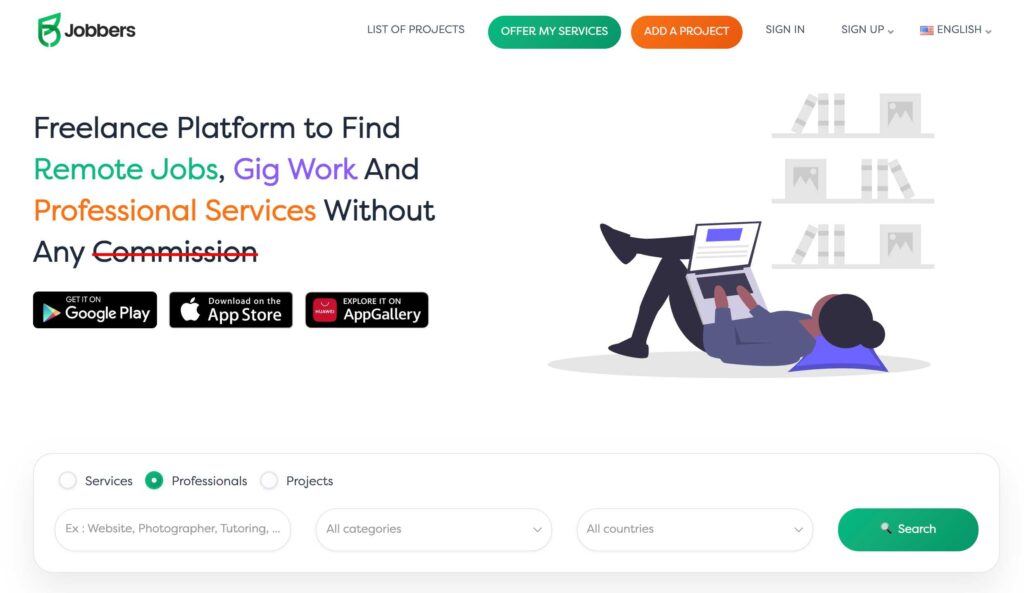
Jobbers
Jobbers also charges no commission, and it lets clients and freelancers agree on payment directly rather than routing money through the platform. The trade-off is that it has no built-in escrow, so you handle payment protection yourself with a contract or milestones. Its talent pool is smaller and newer than the big marketplaces.
If keeping fees low is your main goal, these two are worth a look. For WordPress work, though, the fee line is rarely the deciding factor. Match quality matters more, and that points toward the last group of alternatives.
Niche specialist platforms
Specialist platforms take the narrowing one step further. Instead of covering every field, each one is built around a single type of work, so every buyer and every professional shows up for the same reason. That focus tends to raise match quality, because the platform is not trying to be everything to everyone.
99designs

99designs is a design specialist platform. It runs on contest and direct-project models, which work well for design buyers who know the look they are after and want options to choose from.
Codeable
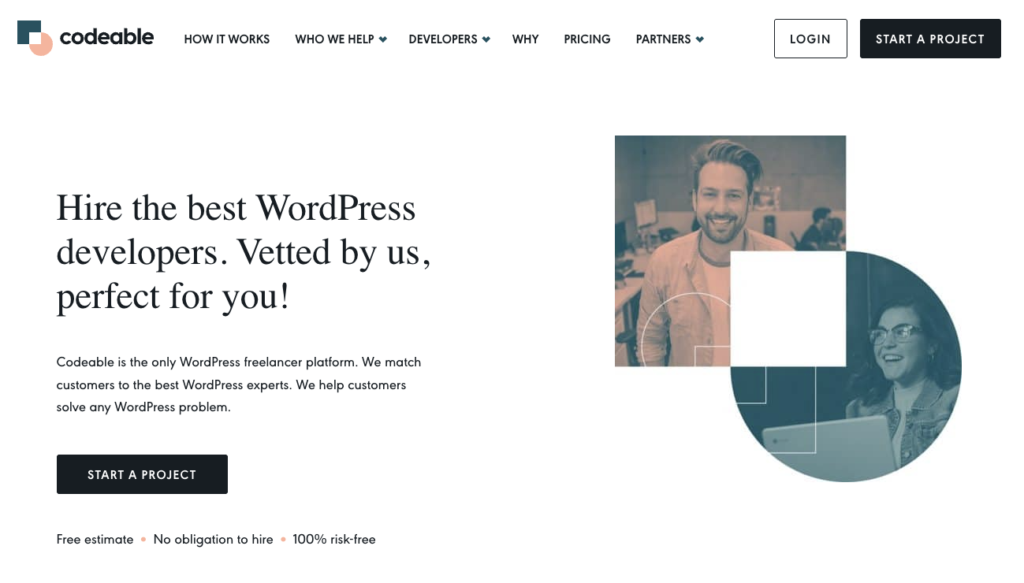
Codeable is a WordPress-only development marketplace where every developer clears a six-step vetting process, and clients receive a single fixed-price estimate rather than a stack of competing bids. That combination solves the two problems that push people off open marketplaces: unpredictable quality and the time lost to screening.
The supporting details back it up.
- Projects come with a 28-day bug-fix warranty and escrow protection, so payment is held until the work is done.
- Pricing is clear before you commit: one estimate built on an $80 to $120 hourly rate plus a 17.5% service fee, with no bidding.
- Codeable is officially recommended by partners like WooCommerce, Kinsta, and Gravity Forms, a trust signal no general marketplace carries.
- Beyond one-off builds, it offers fixed-price packages for audits, WooCommerce work, and consultations, plus managed maintenance plans with a dedicated expert who learns your site.
For agencies, Codeable also runs retainers and team-augmentation blocks of dedicated expert hours, which suit overflow work and skill gaps. Codeable has written a detailed WooCommerce developer hiring guide and WordPress maintenance cost guide that go deeper on both. For WordPress projects, this is the specialist alternative worth shortlisting.
Comparison table
This table lines up the platforms on the facts that matter most, from model and fee shape to vetting and the kind of work each one suits.
| Platform | Model type | Fee shape | Vetting | Best-fit work |
| Fiverr | Gig marketplace | Buyer pays 5.5%, plus $3.50 on orders under $200 | None | Packaged, repeatable one-off tasks |
| Freelancer.com | Bidding marketplace | 10% or $5 freelancer, 3% or $3 client | None | Quick jobs from a large pool |
| Guru | Bidding marketplace | 5% to 9% freelancer by membership, 2.9% client handling | None | Mid-market work with project tools |
| PeoplePerHour | Bidding marketplace | Freelancer fee tiered from 20% down to 3.5% per client | None | UK and EU projects |
| Toptal | Vetted network | Client markup, no freelancer commission | Yes, under 3% accepted | Broad technical, design, and finance hiring |
| Arc | Vetted network | Client fees on top of the developer rate | Yes, top 2% | Long-term remote developer roles |
| Contra | Commission-free | 0% commission, client fee capped at $29 per transaction | None | Budget-led work, smaller pool |
| Jobbers | Commission-free | 0% commission, direct payment, no built-in escrow | None | Budget-led, direct arrangements |
| 99designs | Niche specialist (design) | Contest and project fees | None | Logo and design work |
| Codeable | Niche specialist (WordPress) | Single fixed-price estimate, $80 to $120 rate plus 17.5% fee | Yes, six-step process | Best for WordPress projects |
A few patterns stand out once you read across the rows. The open marketplaces leave the screening to you and fit quick or packaged work. Fiverr adds a 5.5% buyer fee plus $3.50 on orders under $200, Freelancer.com charges 10% or $5 to freelancers and 3% or $3 to clients, Guru runs a 5% to 9% freelancer fee by membership with a separate 2.9% client handling fee, and PeoplePerHour slides from 20% down to 3.5% as your billing with one client grows.
The vetted networks trade a bigger pool for a filter. Toptal accepts fewer than 3% of applicants and charges clients a markup rather than a freelancer commission, while Arc selects for the top 2% and leans toward long-term remote developer roles.
The commission-free options drop the percentage cut. Contra takes 0% but caps a client-side platform fee at $29 per transaction, and Jobbers takes 0% with payment arranged directly and no built-in escrow.
Among the specialists, 99designs covers design through contests and direct projects. Codeable covers WordPress through a six-step vetting process and a single fixed-price estimate on an $80 to $120 rate plus a 17.5% fee, which makes it the pick for WordPress projects.
Which alternative is best for WordPress projects
For WordPress projects, Codeable is the strongest Upwork alternative because every developer is vetted for WordPress specifically and the price is fixed before work begins. This prevents you from having to guess at quality and sort through a pile of bids.
The wider picture comes down to matching the platform to the job in front of you.
- Choose a gig marketplace like Fiverr for simple, packaged tasks you can define in a sentence or two.
- Choose a vetted network like Toptal or Arc when you need broad technical skill across several fields and want the screening handled for you.
- Choose a specialist when the work sits inside one domain, which for WordPress means a platform built around it end to end.
If your next project runs on WordPress, the quickest way to feel the difference is to see how Codeable’s model works in practice.
Where to go from here
If your next project runs on WordPress, the fastest way to see the difference is a side-by-side look at Codeable and Upwork, set against the exact work you need done.
From there, a couple of pages make good next stops. You can start a project or browse experts on the Codeable hire hub, and if you run an agency and need backup for overflow or skill gaps, the agencies page lays out how that works.

Get matched with the developer
that is perfect fit for your WordPress or WooCommerce needs.
Start a project
Frequently asked questions
Is there a better site than Upwork?
For WordPress work specifically, yes. A vetted specialist platform matches you to a proven WordPress developer up front, so you skip the proposal sorting that eats the early hours of an Upwork hire. For general or mixed work, Upwork’s scale still holds up well.
Is Upwork worth it anymore?
For WordPress projects specifically, Upwork is weaker than a vetted specialist service, because its open marketplace makes quality hard to judge from a profile and leaves you doing the screening. It still fits general, packaged freelance work, where its large pool and low entry cost help. The 2025 fee changes also made long-term contracts pricier, pushing buyers to shop around.
Are there free or commission-free Upwork alternatives?
Yes. Commission-free platforms like Contra and Jobbers drop the percentage fee, so they suit budget-led buyers. The trade-off is a smaller talent pool and, in some cases, no built-in escrow, so you handle payment protection yourself. Lower fees are the draw here, not a deeper bench of specialists.
 Dream It